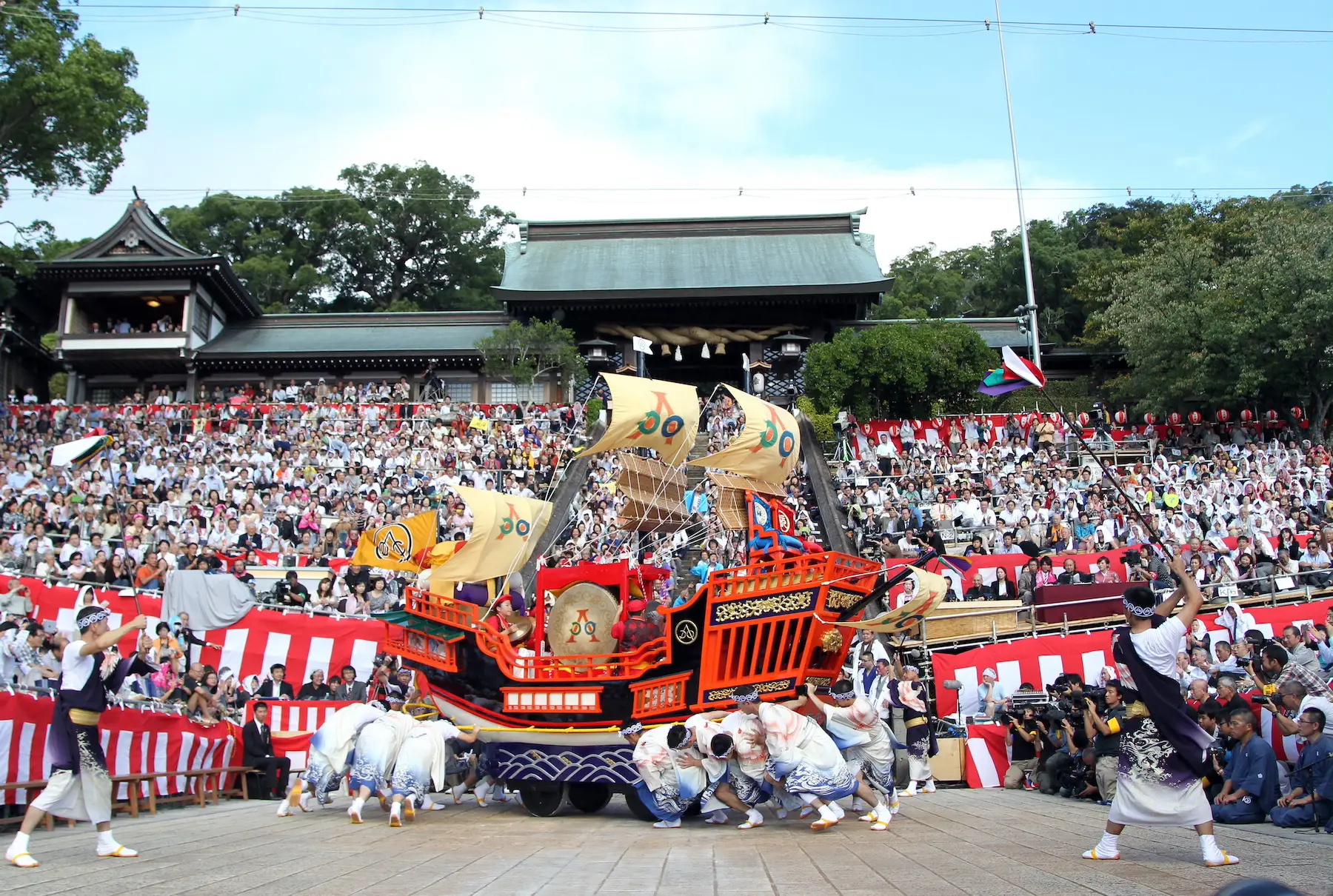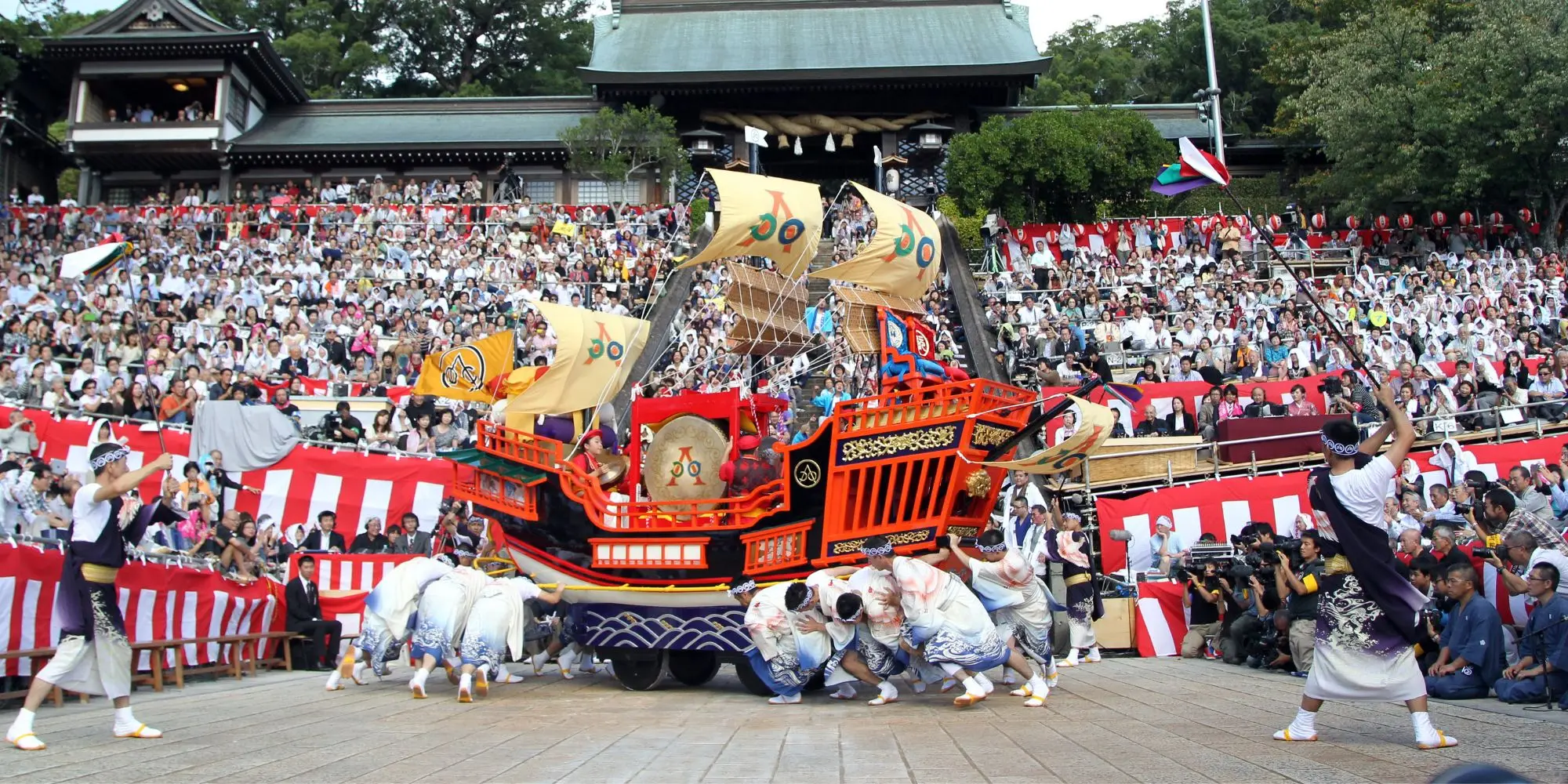
Nagasaki Kunchi performance
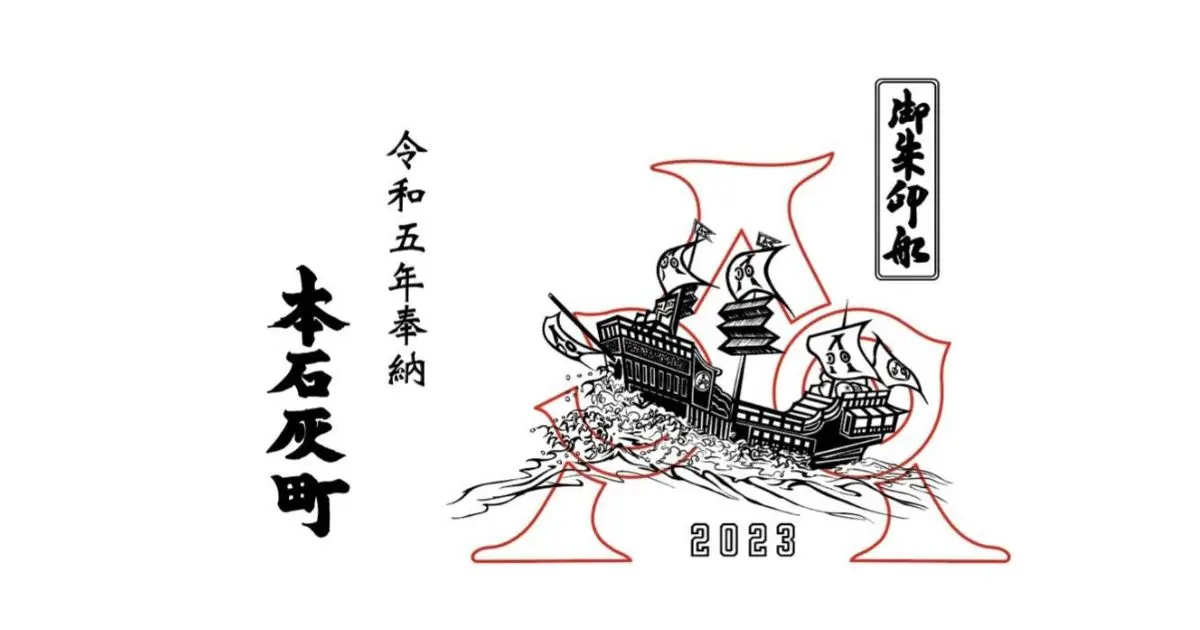
The Goshuinsen
From the late 16th to the early 17th century, ships that traded overseas carrying a vermilion-seal license — a permit to sail abroad — granted by
- Toyotomi Hideyoshi
- Tokugawa Ieyasu
- Tokugawa Hidetada
were called “Goshuinsen” (vermilion-seal ships).
Araki Sotaro, a Nagasaki merchant, captained his own vermilion-seal ship and sailed the seas of Asia.
He won the deep trust of the King of Annam (Vietnam), and in the end married Princess Anio and brought her home to Nagasaki.
The whole town was captivated by the splendid “Procession of Anio-san” of those days. Motoshikkui’s Goshuinsen performance at Nagasaki Kunchi recreates that procession.
The ship flies the “upside-down VOC” flag. It is said that the emblem of the Dutch East India Company — the letters VOC in a circle — was turned upside down so that the Company’s ships would mistake it for one of their own, keeping the ship safe.
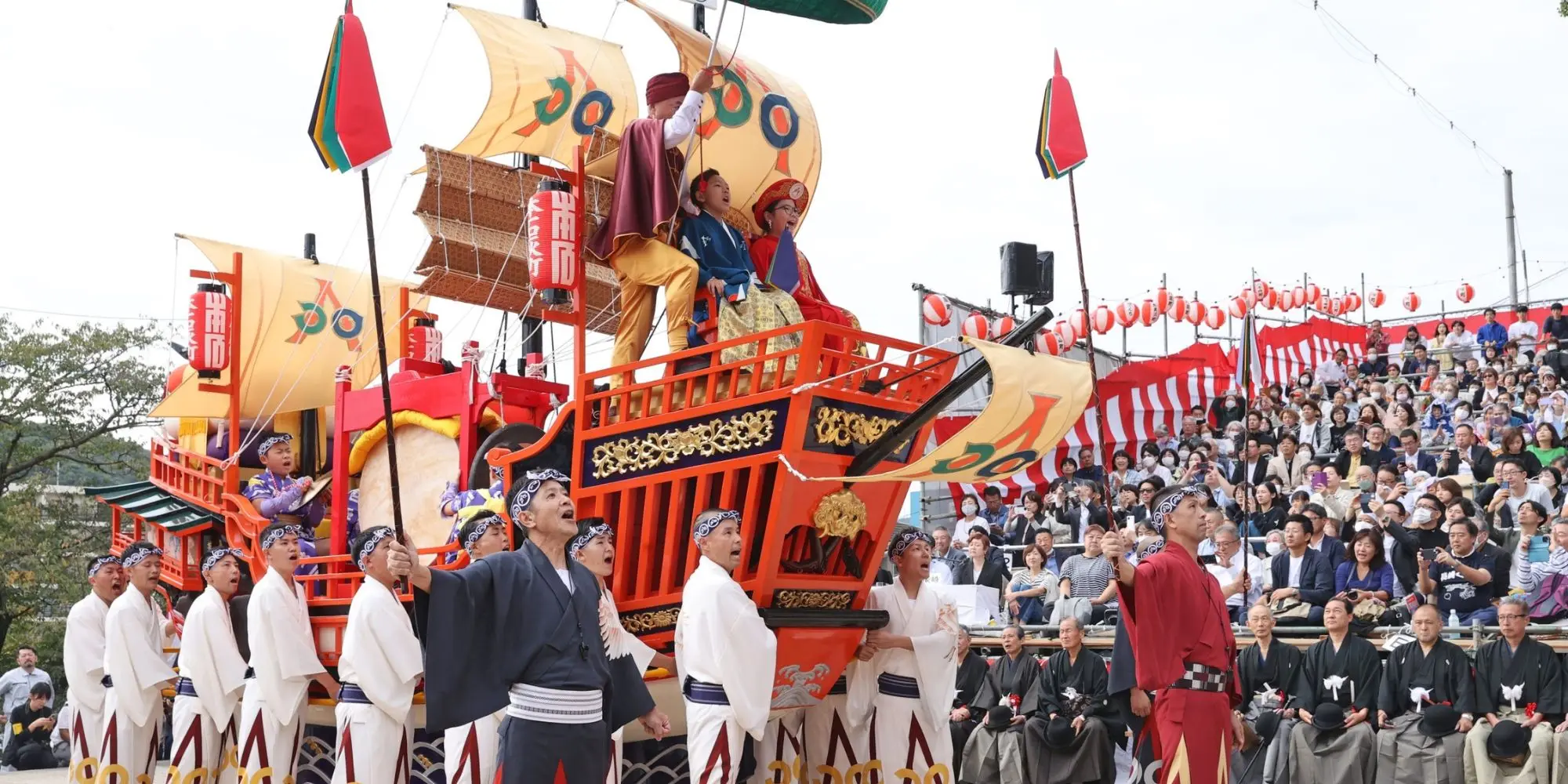
In Nagasaki, people still say something is “like the Procession of Anio-san” when they mean a dazzling, gorgeous and very long procession.
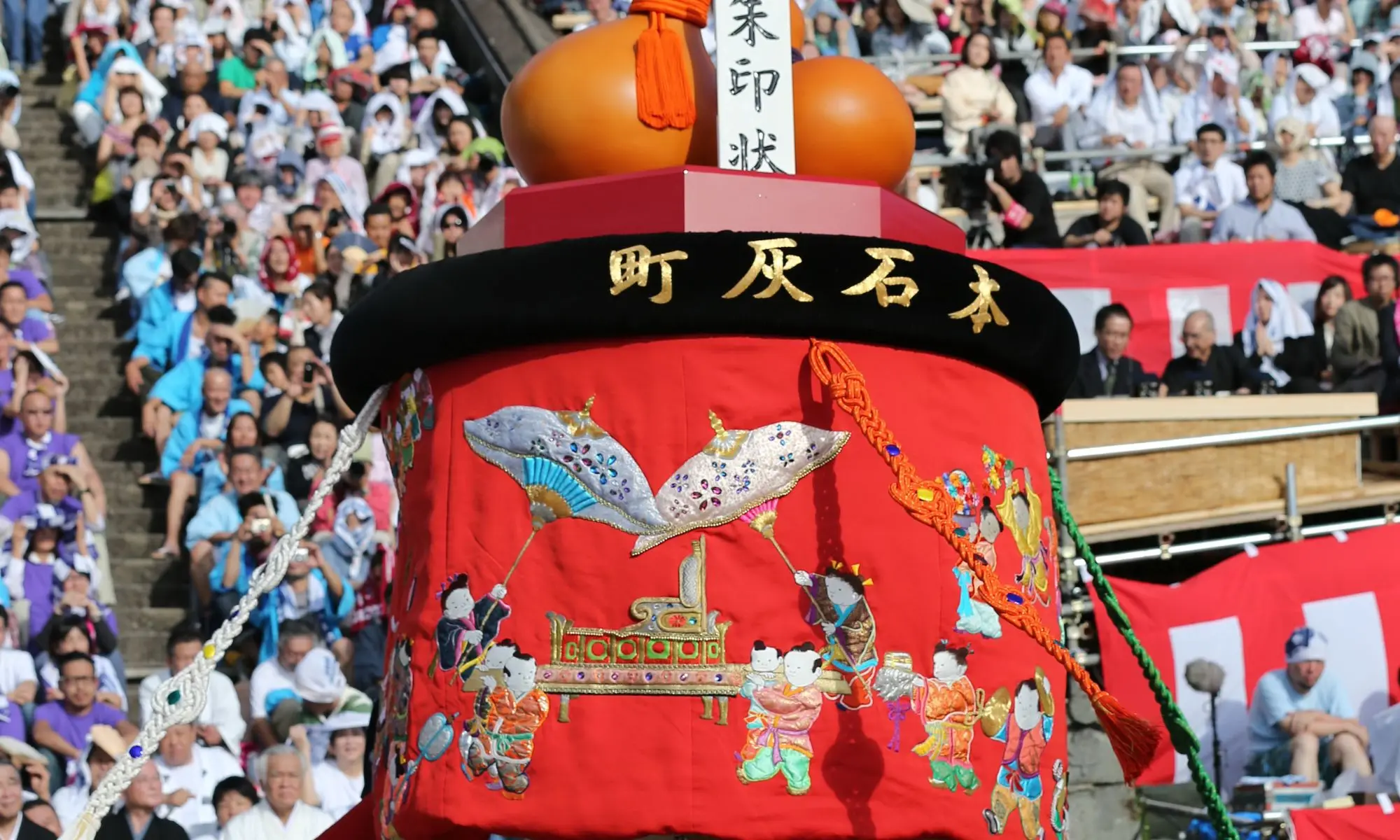
The kasaboko — the great decorated parasol that leads each town’s procession — of Motoshikkui, with its deep history, has drapes (tare) dyed a brilliant red.
In 1592, Araki Sotaro received his first vermilion-seal license from Toyotomi Hideyoshi.
In honor of this, the top ornament (dashi) boldly displays a large and a small “Sennari-byotan” — the cluster of gourds that Hideyoshi used as his standard when going into battle.
On the front hangs the vermilion-seal license, and on the back the “Kinsatsu” (gold tag), a trade guarantee issued by Annam (Vietnam).