
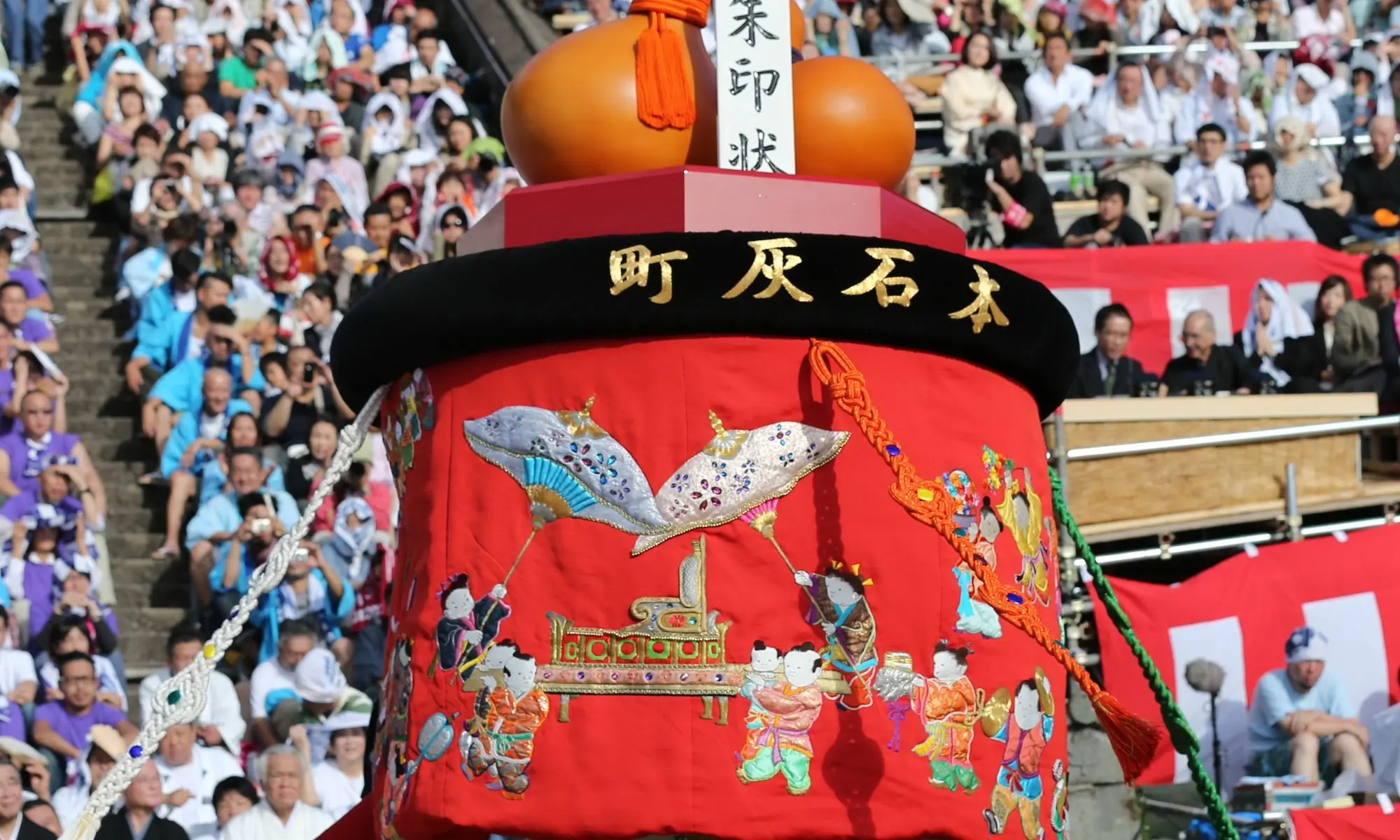
The Town
About Motoshikkui
A closer look at the history of Motoshikkui.
The origin of the name “Motoshikkui”
The town’s name, 本石灰町, is read “Motoshikkui-machi.”
Reading 石灰 (lime) as shikkui comes from the Chinese pronunciation used in old Nagasaki — a corrupted form of the Chinese traders’ word, meaning plaster.
Long ago, this town stood at the mouth of the Gyokutai River and was called Hamasaki.
In Nagasaki, plaster was called amakawa, and Amakawa was the old Japanese name for Macau.
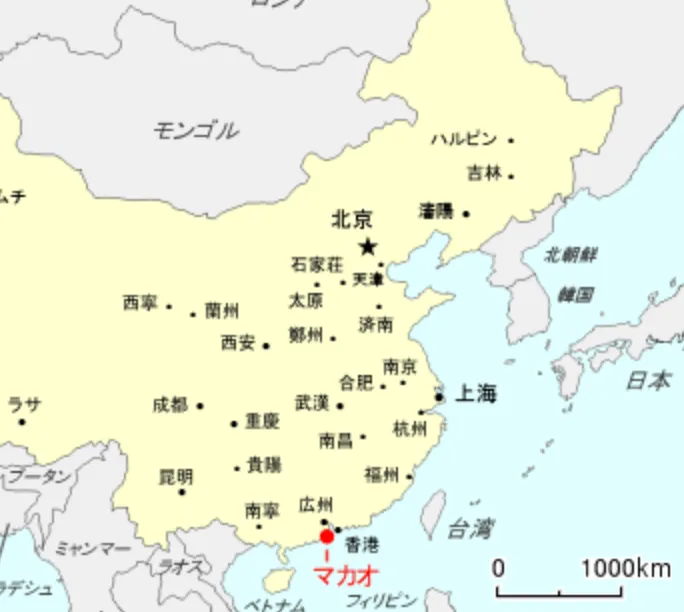
The raw material for plaster in Nagasaki was at first shipped from Macau and piled up on the riverbank here. There was also a landing place nearby, where lime was unloaded for refining oil in the neighboring town of Aburaya-machi (“Oil-merchant Town”). Lime traders came to live here, and it is said that this is how the town got the name Shikkui-machi.
* Lime: mixed with earth for building and waterproofing, and used for refining oil. It was used for earthen floors, sinks and walls and to fix roof tiles, among many other uses. Chinese trading ships also used it to seal their hulls against leaks.
At first the town was called Shikkui-machi, but when Ima-shikkui-machi and Shin-shikkui-machi were founded on the other side of Aburaya-machi, it became Moto-shikkui-machi — the “original” Shikkui town.
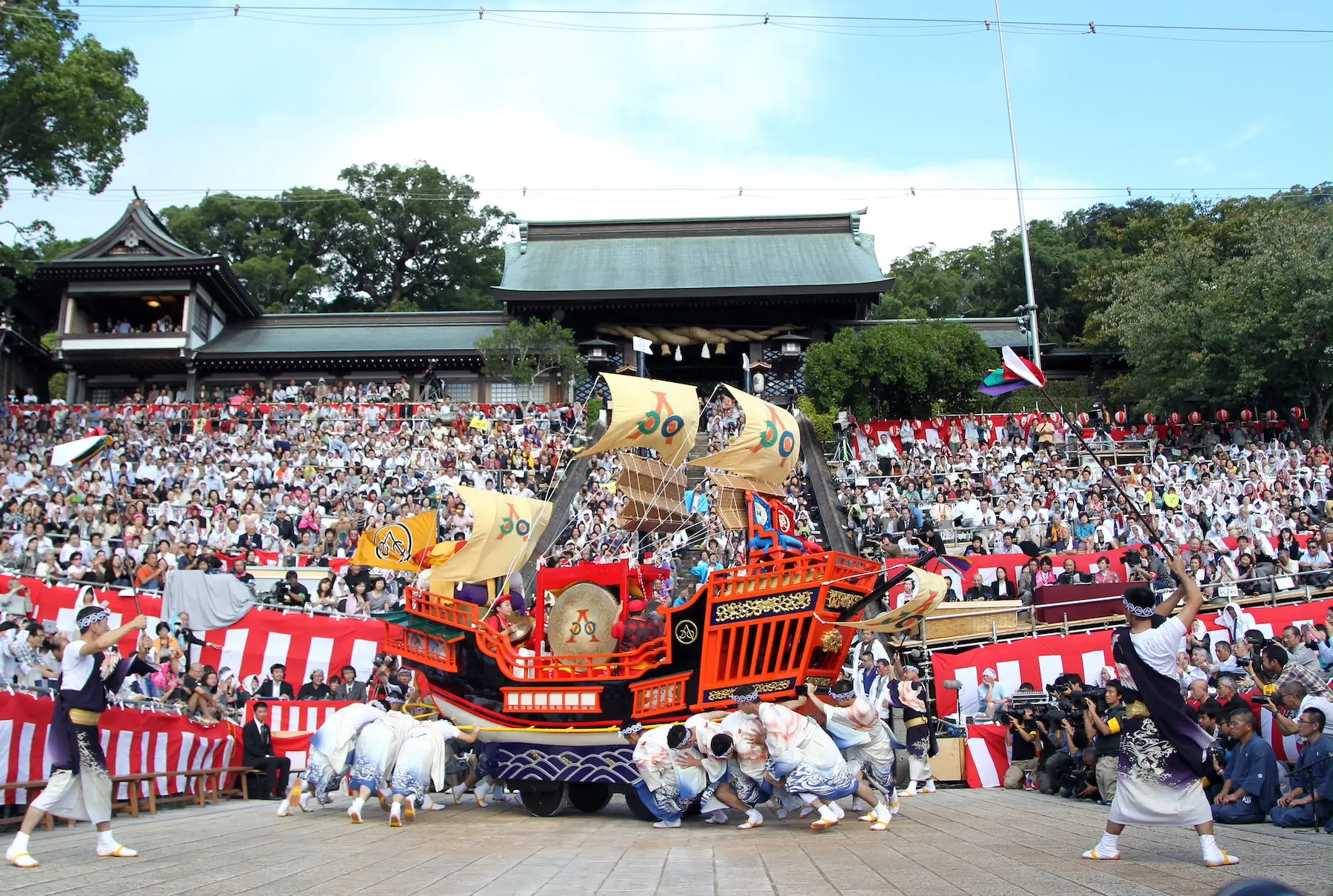
Because of this history, and in memory of the vermilion-seal ships that once sailed from Nagasaki as far as Vietnam and Macau, Motoshikkui performs the Goshuinsen of Araki Sotaro.
History of our performances at Nagasaki Kunchi
Each town takes its turn to perform at Nagasaki Kunchi once every seven years. These are Motoshikkui’s turns and what the town performed.
| Year | Performance |
|---|---|
| 2030 | Goshuinsen (planned) |
| 2023 | Goshuinsen |
| 2013 | Goshuinsen (watch the video (YouTube, opens in a new window)) |
| 2006 | Goshuinsen |
| 1999 | Goshuinsen |
| 1992 | Goshuinsen |
| 1984 | Goshuinsen |
| 1977 | Goshuinsen |
| 1970 | Goshuinsen |
| 1963 | Hon-odori (traditional dance) and a float |
| 1956 | Hon-odori and a float |
| 1949 | Hon-odori and a barrel portable shrine |
| 1942 | Hon-odori |
| 1935 | Hon-odori |
| 1928 | Hon-odori |
| 1921 | Hon-odori |
| 1914 | Both the kasaboko and the dance were cancelled due to the mourning for the Empress Dowager and the World War (Hon-odori had been planned). |
| 1906 | Hon-odori |
| 1899 | Split performance: (1) Hon-odori and a danjiri float, (2) Ryujin (dragon god) dance |
| 1892 | Hon-odori |
| 1885 | Ja-odori (dragon dance) |
| 1878 | Unknown |